Retaining Wall Insights for Mother Lode Homeowners
Retaining Wall Insights for Homeowners | T-N-T Paving
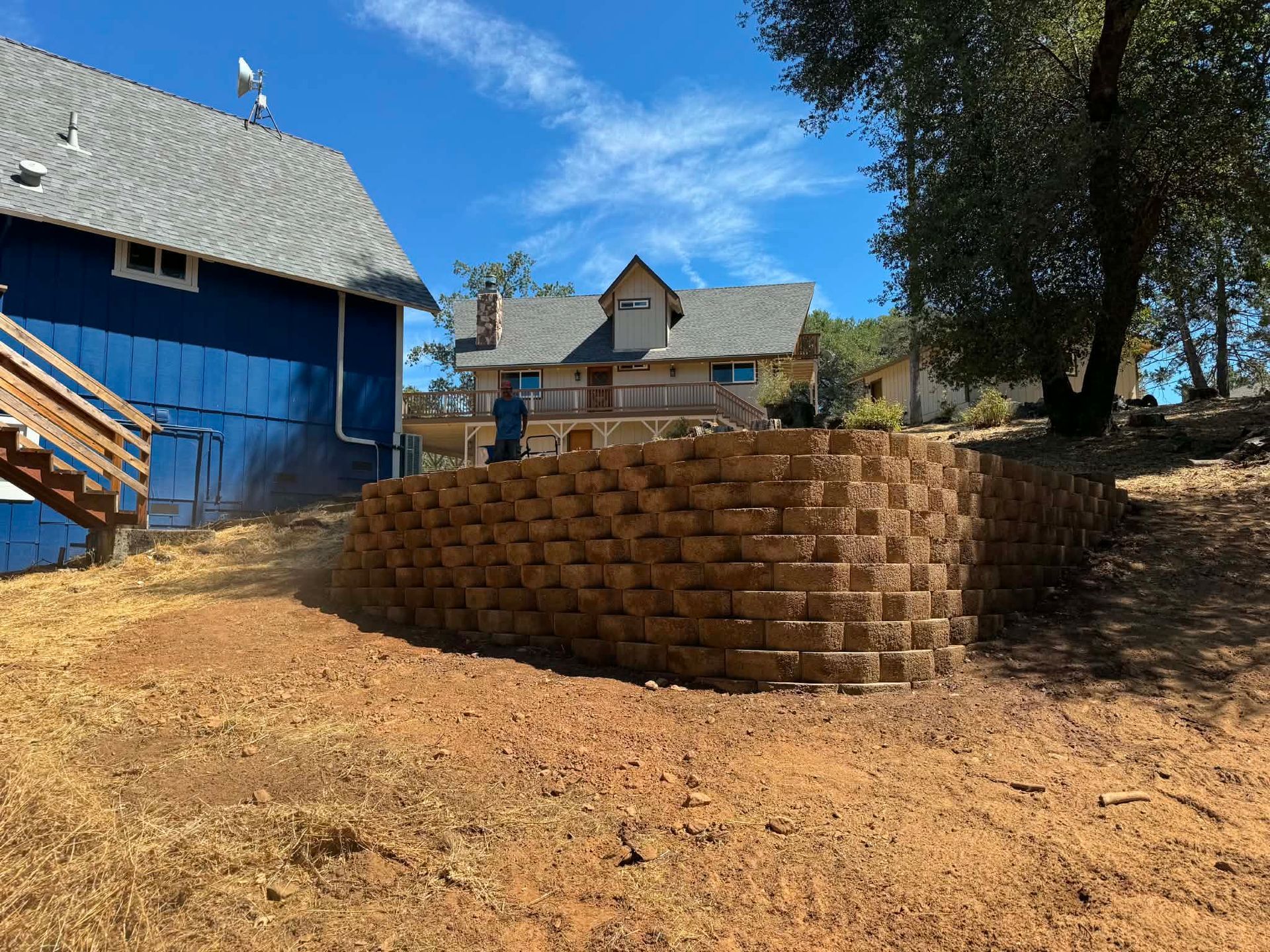
Retaining Wall Insights for Mother Lode Homeowners
Living in the Mother Lode comes with some incredible properties, but our foothill terrain can also bring steep slopes, elevation changes, runoff, erosion, and areas of land that are difficult to use.
That is where retaining walls can become an important part of a property improvement.
A retaining wall isn't simply something built against a hillside. It has to work with the ground around it. The slope, drainage, excavation, access, surrounding structures, and intended use of the area can all affect how the project should be approached.
Here are some of the most important things homeowners should understand before getting started.
What Does a Retaining Wall Actually Do?
At its most basic level, a retaining wall holds soil at different elevations. But depending on the property, that can accomplish several things at once.
A retaining wall may help create flatter ground, support a cut hillside, separate different elevations, improve areas around driveways or building sites, manage erosion, or make previously difficult portions of a property more usable.
For properties with substantial elevation changes, retaining walls can also become part of a larger excavation and grading plan.
Instead of forcing the property to work around the slope, the goal is to create a layout that makes better use of the terrain.
Signs Your Property May Benefit From a Retaining Wall
Not every slope needs a retaining wall. However, there are situations where it's worth having the property looked at.
Homeowners may want to consider a retaining wall when:
- Soil is repeatedly washing down a slope.
- Runoff is creating erosion or damaging usable areas.
- A hillside limits space around a home or building.
- A driveway or private road needs additional support.
- New construction requires changes in elevation.
- A home pad or building site is being created on sloped ground.
- Landscaping areas are difficult to maintain because of the grade.
- The property would benefit from additional flat, usable space.
The important part is identifying what problem you're actually trying to solve before deciding what the wall should look like.
Why Excavation Matters Before the Wall Is Built
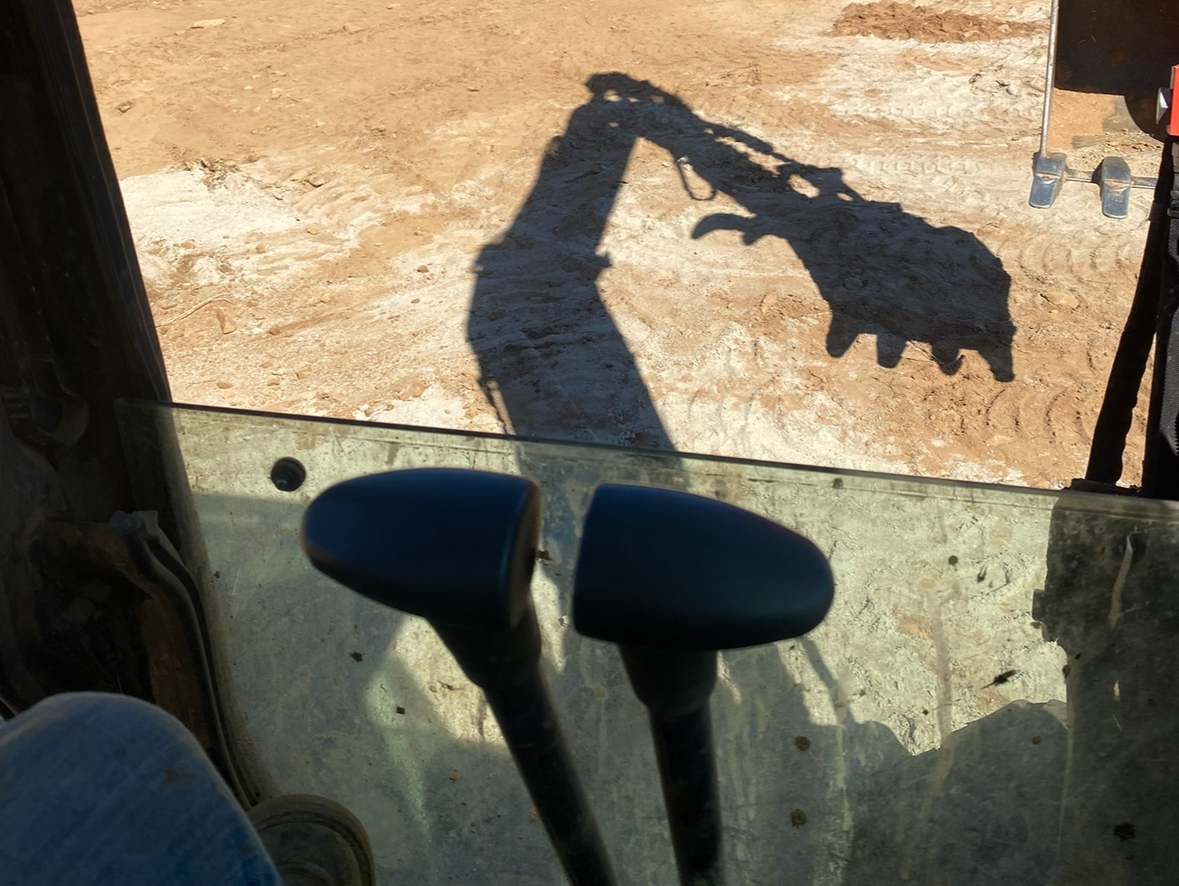
A retaining wall starts in the dirt.
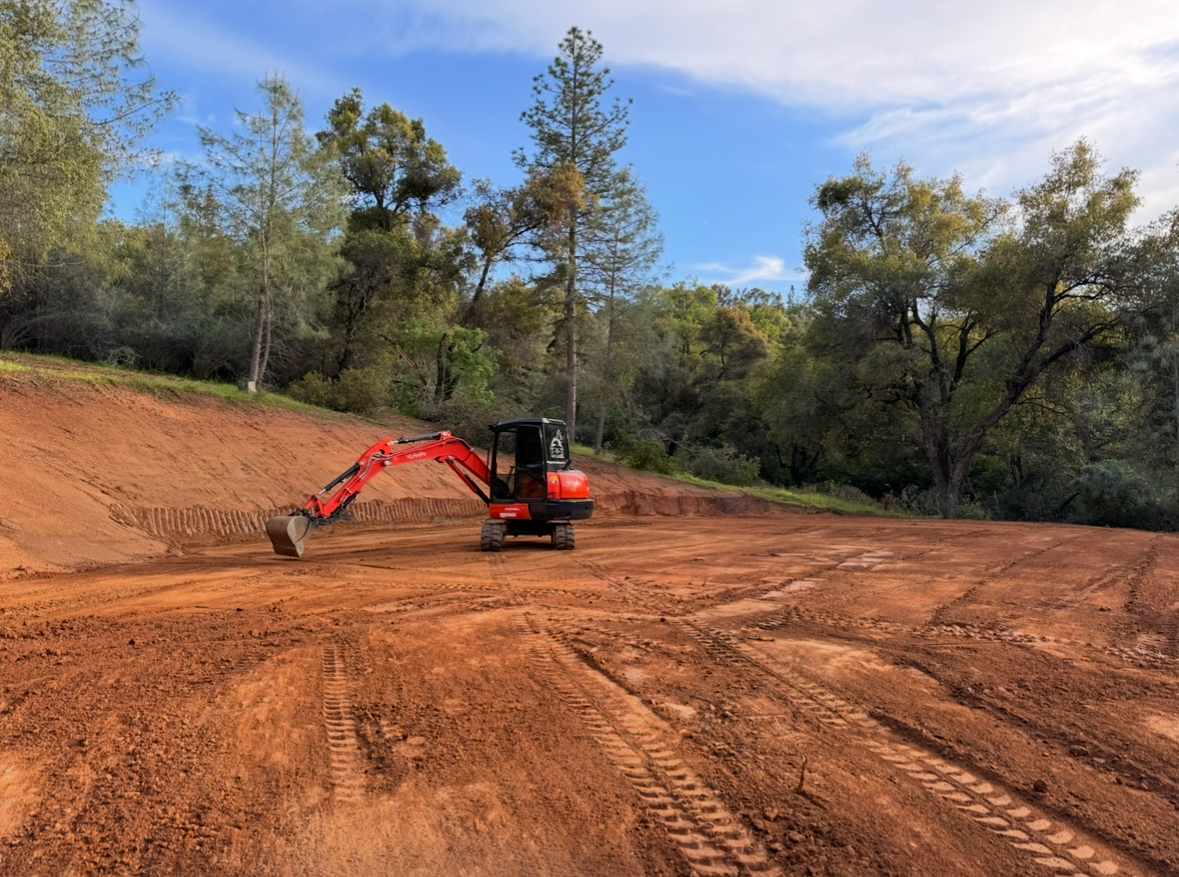
Before construction can begin, the site may need to be excavated to establish the wall location, footing or base area, working room, surrounding grades, and access for equipment and materials.
On a hillside property, this can become a significant part of the project.
That's one reason working with a company experienced in excavation and grading can be valuable. The wall isn't being considered in isolation. The crew can look at how the entire area needs to be shaped before and after construction.
Don't Overlook Drainage
Water and retaining walls need to be considered together.
Rainfall and runoff moving through the soil behind a wall can create pressure and contribute to erosion or other problems if the project doesn't account for how water will move through the area.
The surrounding property matters too.
Where does water come from during heavy rain? Where does it currently travel? Where should it go after the project is completed?
Those questions should be part of planning the site.
Good drainage isn't just about protecting the retaining wall. It can also help protect nearby driveways, roads, structures, landscaping, and other improvements.
Retaining Walls Can Create More Usable Property
This is one of the biggest reasons homeowners consider retaining walls.
A steep section of property may not be particularly useful in its existing condition. By combining excavation, grading, and retaining walls, it may be possible to create flatter areas that better serve the property.
Depending on the site, that space could become part of a yard, driveway, parking area, access route, landscaping project, building site, or another future improvement.
This is especially relevant throughout the Mother Lode, where properties aren't always laid out on nice, flat ground.
Sometimes the land needs a little persuasion.
Retaining Walls Around Driveways and Private Roads
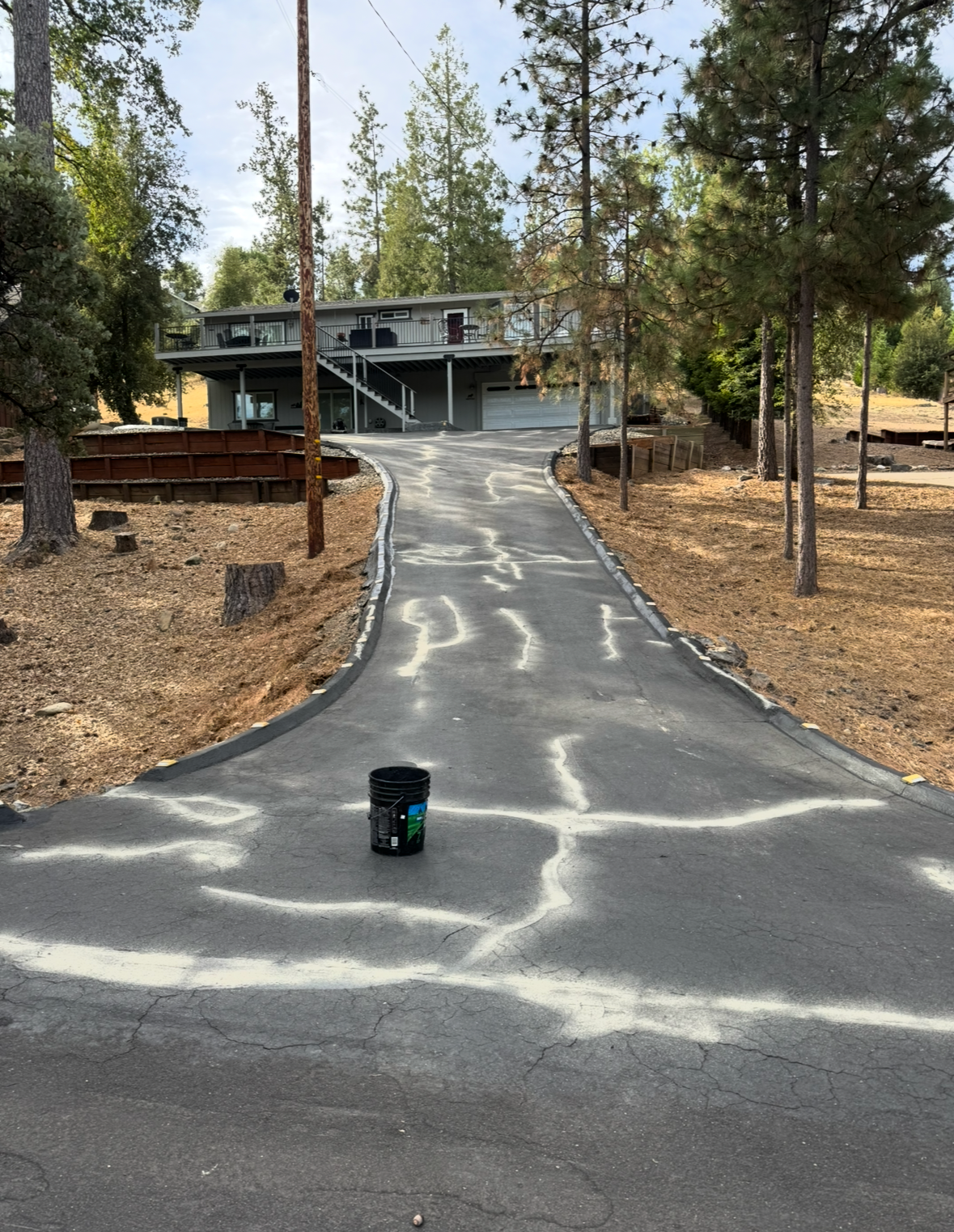
Driveways and private roads often have to cross changing elevations, particularly on rural and foothill properties.
When a roadway is cut into a slope, retaining walls may become part of the overall solution for managing the surrounding terrain.
This is where several services can overlap.
Excavation establishes the route. Grading establishes the elevations and shape. Drainage helps control water. Retaining walls can help manage adjoining slopes. Base preparation and paving can then create the finished driving surface.
Looking at those pieces together can produce a much better plan than treating each one as an unrelated project.
Retaining Walls and New Construction
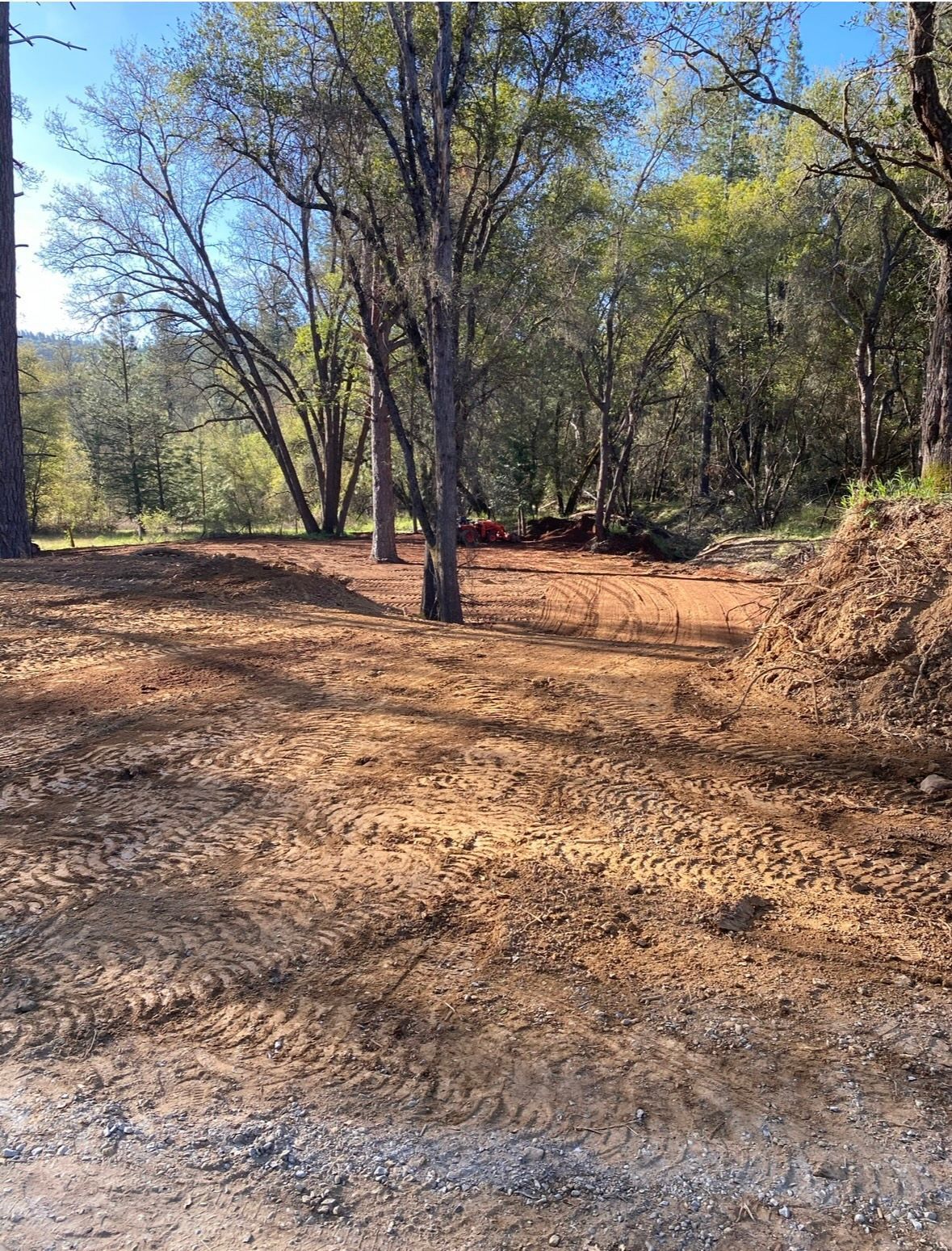
Building a home, shop, garage, or other structure on sloped property can require significant site preparation before construction ever begins.
Home pad excavation, foundation preparation, grading, drainage, driveway access, and retaining walls may all become pieces of the same puzzle.
Planning these elements together can help the property transition from raw ground into a usable construction site.
For homeowners preparing to build, it makes sense to think beyond the wall itself and consider what the entire finished property needs to accomplish.
Erosion Is Often a Property-Wide Issue
If erosion is the reason you're considering a retaining wall, it's worth looking beyond the exact spot where soil is disappearing.
The real problem may begin farther uphill.
Water can travel across a property, concentrate in certain areas, and then cause erosion somewhere completely different. Simply addressing the damaged area without considering where the water originates may leave the underlying problem unresolved.
A broader look at grading, drainage, slopes, and runoff can help determine what improvements make sense for the property.
What Should You Consider Before Calling a Contractor?
You don't need to know exactly how the retaining wall should be built before calling someone. That's part of having the site evaluated.
But it helps to know what you want the finished project to accomplish.
Think about questions such as:
- What problem am I trying to solve?
- Is erosion occurring?
- Do I need more usable space?
- Is the wall connected to a driveway or road project?
- Am I preparing for new construction?
- Are there drainage problems during heavy rain?
- What do I eventually want this area of the property to become?
Those answers give the contractor a much better picture of the larger goal.
Local Terrain Makes Local Experience Valuable
Properties throughout Sonora, Tuolumne County, Calaveras County, Mariposa County, and the surrounding Mother Lode can vary dramatically.
One property may have relatively gentle terrain while another has steep hillsides, rock, narrow equipment access, drainage challenges, and major elevation changes.
There isn't one retaining-wall solution that makes sense everywhere.
Understanding the property itself is the first step.
Start With a Job Walk
If you're considering a retaining wall, the easiest place to begin is with the property itself.
T-N-T Paving & Excavating has been serving the Mother Lode for more than 30 years as a family-owned and operated business. Our work includes retaining walls, excavation, grading, drainage, home pads, roads, driveways, paving, and other site improvements.
We'll look at what you're trying to accomplish, the surrounding terrain, access, drainage, and how the retaining wall fits into the larger property.
Ready to work with T-N-T Paving & Excavating?
Let's connect! We’re here to help.
Send us a message and we’ll be in touch.
Or give us a call today at 209-984-5010
Agency Contact Form
More Marketing Tips, Tricks & Tools